

Under the Mask of Peacebuilding: Miscalculations and the Fight over Resources in Ukraine
Will the minerals agreement with the US be a bad deal for Ukraine? Looking at past deals, a team of scholars demonstrate that accuracy in accounting is crucial.
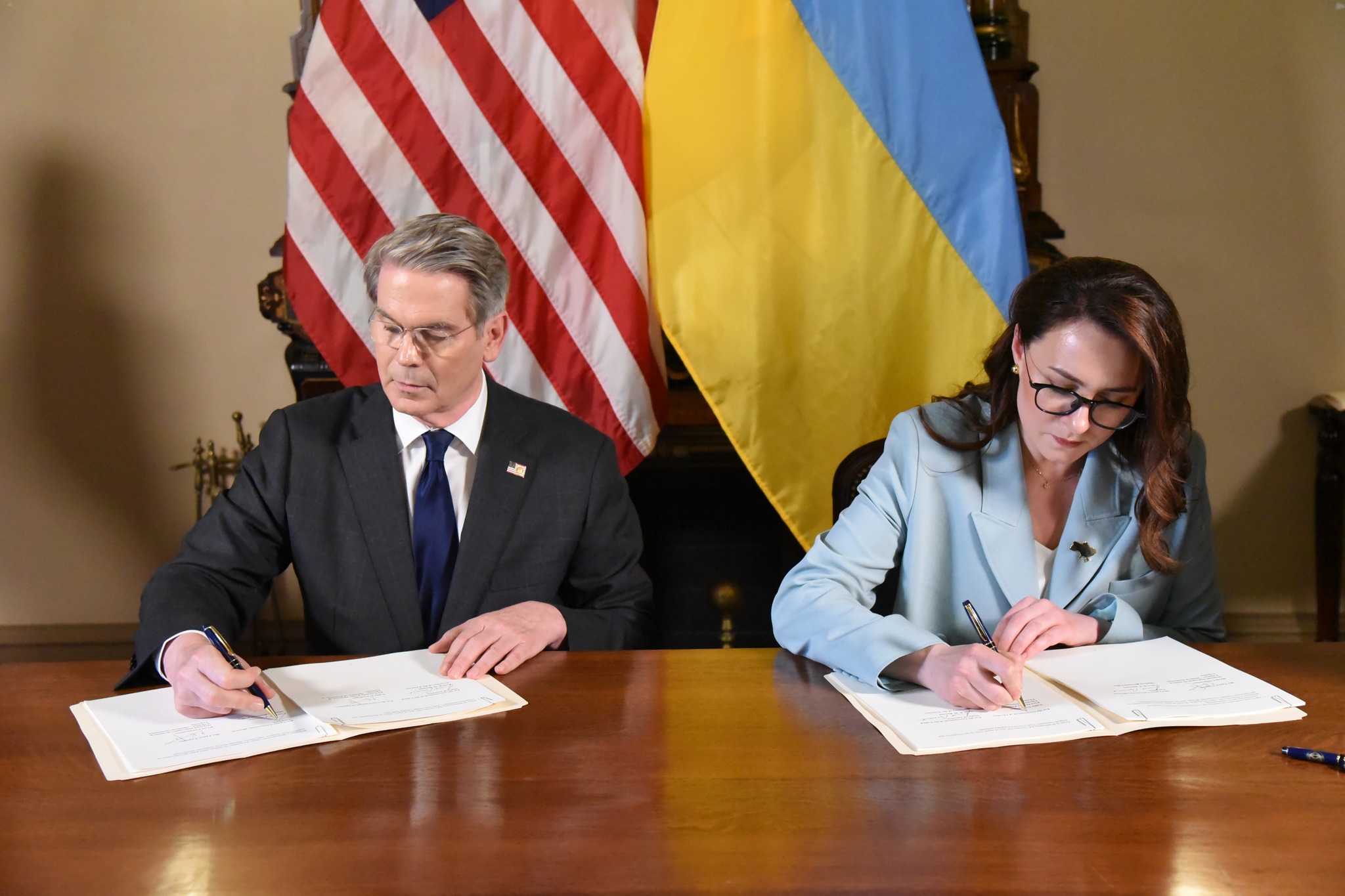

This fall, a US delegation will visit Ukraine to plot future American enterprises in the country’s critical minerals industry, leveraging the access provided in the US-Ukraine minerals deal signed earlier this year. The deal gives the US extensive control over Ukraine’s resources and development projects. Ukraine may have had no choice but to agree to the arrangement, or risk losing US military support for its war with Russia.
It’s not the first time Ukraine has been handicapped in a bargaining deal. In recent history, Ukraine has been squeezed by Russia, the US, and other Western powers into compromising agreements—such as the Budapest Memorandum, where it ceded its nuclear arms in exchange for security that never materialized, and the Minsk agreements that were supposed to end Russia’s 2014 incursion but failed. In the minerals deal, Ukraine is squeezed again: it must cede some control over resources and development while getting no security guarantees in return.
Historically, the search for resources has been a key driver for colonizers. Countries recovering from major shocks, such as wars, often face exploitation from powerful nations and corporations. One of the drivers for recent Russian aggression against Ukraine, for example, is to gain control of its minerals and other resources. We see the same motivation for the US in the latest minerals deal. Our research explores how accounting, valuation, and resource control have become tools in a modern neocolonial contest, with Ukraine’s mineral wealth at its epicenter.
In February 2025, the US government unveiled the first version of its minerals deal with Ukraine. The declaration acknowledged US desire to “invest in a secure and sovereign state” and Ukraine’s contribution to international peace, referencing when in 1994 it voluntarily abandoned the world’s third-largest arsenal of nuclear weapons. Behind the diplomatic language lies a deeper question: When does aid become leverage, and when does peacebuilding mask a struggle for control? As Ukraine fights for its survival and sovereignty, it finds itself caught in a geopolitical tug-of-war—not only between East and West, but between promises and power, grants and debts, and peace and profit.
The Destruction of War
It is hard to overstate Ukraine’s disadvantaged position at the negotiating table. According to the World Bank, Ukraine’s total reconstruction and recovery needs are estimated at USD 524 billion (nearly 2.8 times its 2024 GDP), underscoring the staggering scale of devastation caused by Russia’s most recent invasion.
By the end of 2024, infrastructure damage in Ukraine exceeded $175 billion, with housing, transportation, and energy taking the biggest hit. More than 13 percent of Ukraine’s housing stock—affecting over 2.5 million households—has been damaged or destroyed. Over 40,000 civilians have lost their lives. Humanitarian needs are widespread, with 12.7 million people requiring assistance.

Ukraine’s Resources
Ukraine is home to Europe’s largest reserves of lithium, titanium, and uranium. It is the seventh-largest producer of wheat, the fourth-largest exporter of barley, and the biggest exporter of sunflower seeds (producing sunflower oil and food for humans and animals). Further, Ukraine possesses 5 percent of the world’s mineral resources, including twenty-three of the fifty materials deemed critical by the US government.
Additionally, Ukraine possesses extensive hydrocarbon reserves, including coal, natural gas, and oil; however, a significant portion of these resources is in areas now under Russian control, such as offshore natural gas sites near the Crimean Peninsula and coal deposits and mines in eastern Ukraine. With about 20 percent of Ukraine occupied by Russian forces as of February 2025, approximately 40 percent of the country’s minerals and rare earths are now controlled by Russia. By gaining control, these resources become rights or assets that Russia can utilize to derive future economic benefits, such as continuing to fund its war efforts.
However, Russia is not the only state seeking to gain control over Ukraine’s mineral wealth. In the first version of the minerals deal, US President Donald Trump announced that amounts previously accounted for as US aid to Ukraine should instead be considered loans, and that Ukraine must sign rights to its remaining mineral resources over to the US as repayment for these new debts, while security guarantees remained unclear.
Will Ukraine be able to withstand the new “crossfire” from both East and West? It is valuable to look back at previous (dis)agreements and recent Ukraine–US resource negotiations to understand the true balance of costs on both sides of the bargaining table.

The Consequences of Budapest
In 1994, Ukraine’s newly elected leaders acquiesced to the diplomatic pressures exerted by both Moscow and Washington, and ceded its nuclear arsenal in exchange for security guarantees from the US, the United Kingdom (UK), and Russia under the Budapest Memorandum. Despite these guarantees, Russia invaded Ukraine in 2014 and again in 2022, leading to ongoing conflict and placing the effectiveness of the agreement in question. Many in Ukraine now view the nuclear arsenal decision as a strategic mistake that failed to provide the promised security.
Nevertheless, in exchange for giving up its nuclear weapons, the Budapest Memorandum provided loans and fuel for Ukraine to develop nuclear power plants and thus benefit economically. In the early 1990s, Ukraine had experienced a financial crisis and rolling electricity blackouts nationwide. By ceding its strategic bombers, Ukraine could partially pay down its gas debts (to Russia) to rectify this issue. Disarmed, Ukraine exported basic commodities such as grain and steel, fought to protect free elections, and transformed itself from a centrally planned to an oligarch-run economy with a limited defense capability. But following disarmament, Ukraine was unable to reconstruct its arsenal of rockets and fighter jets or replenish its military supplies—a decision that, in hindsight, appears to have been a misstep. Many Ukrainians were confident, after nuclear disarmament, that the US and UK would protect them in the face of future danger; however, Russia has since invaded twice.
In the early 1990s, Western partners pressured the Ukrainian government so that it had no option but to sign the Budapest Memorandum. If Ukraine had tried to keep its nuclear weapons in 1994, it would have faced political and economic costs. For example, Kyiv would have had limited relations with the US and European countries (witness the virtual pariah status that a nuclear North Korea suffers); NATO would not consider any future partnership relationship with Ukraine; and the European Union (EU) would not have signed a partnership and cooperation agreement as it did in 1994, let alone an association agreement as it did in 2014; Kyiv would have received little in the way of reform and technical or financial assistance from the US and EU; and Western political leaders would have blocked aid and low-interest loans to Ukraine.
The Budapest Balance Sheet
After the Budapest Memorandum was signed, the US demilitarized Ukraine and offered at least USD 175 million to help pay the actual cost of dismantling Ukraine’s nuclear weapons (equivalent to USD 371 million in 2024). Additionally, in 1994, the US doubled its economic aid to Ukraine, to USD 310 million (equivalent to USD 658 million in 2024), a process that was fully completed by 2008. In 2009, the two nations with the two largest nuclear arsenals—Russia and the US—issued a joint statement reaffirming that their jointly agreed self-imposed nuclear arms controls under the START Treaty would remain in effect until February 2026. However, President Putin pulled participation in New START in February 2023, citing US support for Ukraine as a key reason.
The table below highlights the significant disparity between the financial aid received and the value of the nuclear weapons given up under Budapest. In sum, the US gave Ukraine USD 6.3 billion in exchange for Ukraine giving up USD 291 billion in nuclear weapons. Security guarantees were one of the most important parts of the Budapest Memorandum for Ukraine, yet they cannot be quantified or assessed in any numerical form. As the invasions of 2014 and 2022 show, those guarantees remained only on paper. Hence, Ukraine was drawn into ceding its nuclear arsenal, but did not receive the security promised. Not surprisingly, President Zelenskyy has called for fair calculations and valuations in future “deals.” The published data below have been interrogated, and we recognize that other gains and losses could have arisen from the memorandum.
Table 1: Ukraine’s Estimated Gains and Losses After the Budapest Memorandum and the Nunn-Lugar Cooperative Threat Reduction Program
| DATE OF ANNOUNCEMENT | GAINS | REVENUE AMOUNT (IN 2024 USD) | LOSSES | EXPENSE AMOUNT (IN 2025 USD) |
|---|---|---|---|---|
1994 (Under the Budapest Memorandum) | Security guarantees | Unquantifiable | Nuclear weapons | -291,200,000,000 |
Written off gas and oil debts to Russia | +5,300,000,000 | |||
1994 – 1st tranche | Financial assistance from the US | +371,000,000 | ||
1994 – 2nd tranche | Economic aid to Ukraine from the US | +658,000,000 | ||
Totals | +6,329,000,000 | -291,200,000,000 |
The State of Ukraine’s Mineral Deposits
Ukraine is generally rich in mineral resources, 60 percent of which are still under Ukrainian control. The map below illustrates the location of critical minerals across the country, including in the occupied territories. In contrast to most European countries, Ukraine hosts various critical mineral deposits and is increasingly examining their potential for supporting its economic recovery. Out of thirty-seven critical mineral deposits in Ukraine, eleven are operational, seven have been licensed to mining companies—although extraction has not yet begun—and the remaining nineteen are ready for auction.

The Russian invasion has stalled the mining of Ukraine’s critical mineral deposits, with investors hesitant and the state lacking infrastructure funds to move ahead with development. Existing exports are hindered by transport constraints, despite growing demand for minerals like titanium. Nevertheless, preparations for post-war large-scale extraction have accelerated, with strategic partnerships and legislative changes underway.
Background to the Minerals Agreement
The Ukraine–US mineral resources agreement appears to build on experience with Afghanistan during Trump’s first presidency, when he expressed frustration with the prolonged US military presence in Afghanistan and sought ways to justify continued engagement. Trump noted then that Afghanistan’s mineral wealth was a potential economic benefit for both countries. Reports indicated that he discussed the idea of American companies helping to develop Afghanistan’s mining sector with then-President Ashraf Ghani. Security concerns and lack of infrastructure remained major obstacles. Further, China, which already had mining agreements in Afghanistan, was seen as a competitor in securing access to these resources. The US viewed securing rare earth minerals as part of a broader geopolitical strategy aimed at reducing China’s advances. However, security risks from the ongoing Taliban insurgency, lack of mining infrastructure, and corruption in Afghanistan made large-scale US investments unfeasible. Following the US withdrawal from Afghanistan in 2021, China has taken a more active role in negotiating mineral extraction deals with the Taliban government.
Evolution of the Minerals Deal
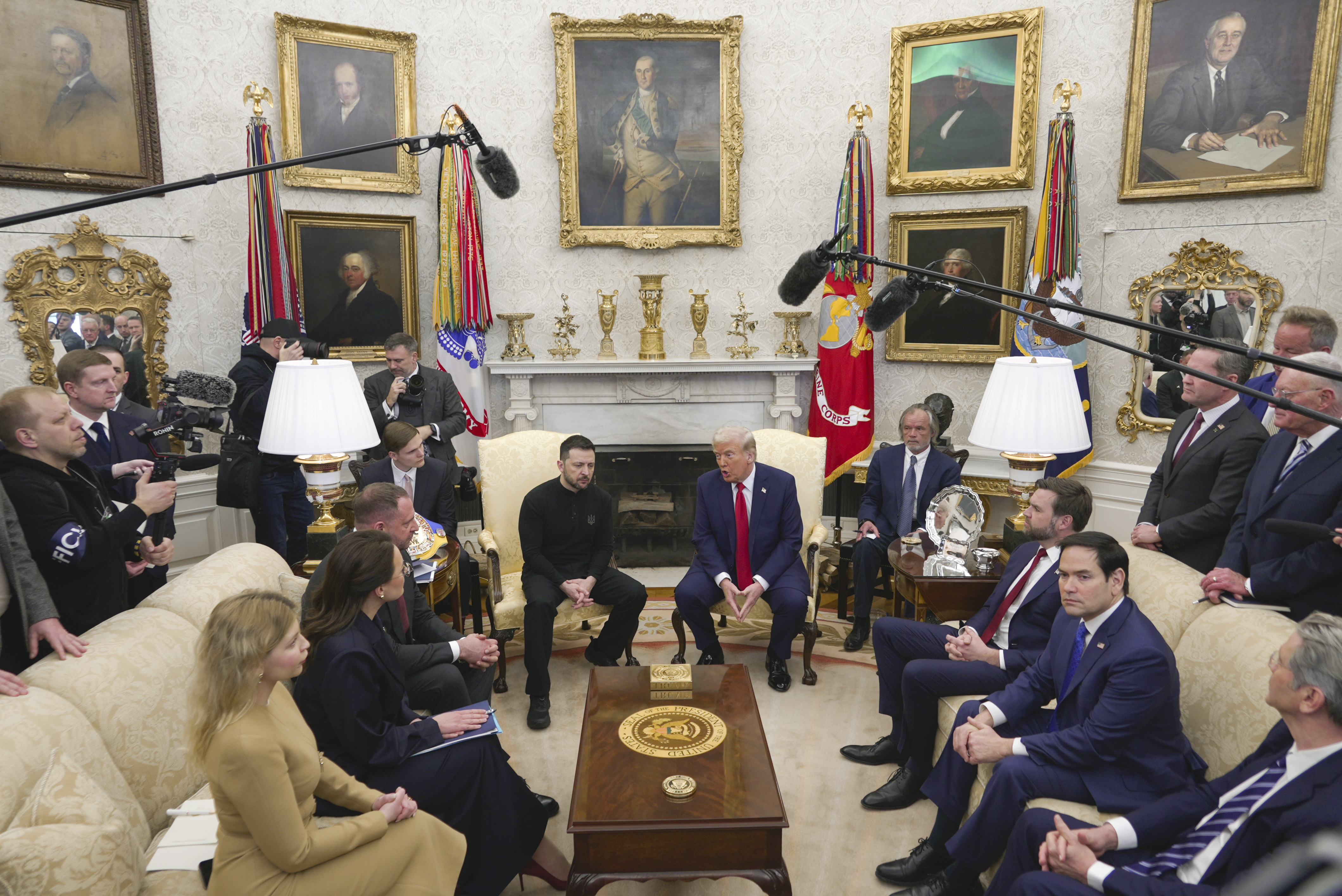
The final version of the Ukraine–US mineral resources deal calls for the establishment of a joint investment fund for mining Ukraine’s natural resources, including critical rare-earth elements, oil, and gas; it includes provisions for reconstruction efforts. The negotiations around this agreement started in February 2025 and ended in late April 2025. In the February version, President Trump stated that the US was close to a deal “where we [the US] get our money back over a period of time,” framing the proposed resources agreement as repayment for past aid. The initial deal called for Ukraine to use its mineral resources to repay the United States USD 500 billion for military aid previously provided. Just days later, on February 28, Ukrainian President Volodymyr Zelenskyy met with Trump and Vice President JD Vance in the Oval Office to finalize the deal—but the meeting ended abruptly, and the agreement was not signed. The US suspended military aid and intelligence sharing with Ukraine for eight days, to pressure Ukraine into an agreement.
The table below summarizes the amount of aid provided to Ukraine from the US between 2022 and 2024 that the first (February 2025) version of the mineral resources deal proposed to convert into loans. It lists various grants and their amounts. The total aid amounts to USD 121 billion, from which only USD 20 billion was initially designated as loans. Ukraine planned to pay that loan back with the interest earned from immobilized Russian sovereign assets. The table clearly illustrates that the total US support to Ukraine was much less than the USD 500 billion called for by the US.
Table 2: Ukraine Support and Loans from the US, 2022–2024
| DATE OF ANNOUNCEMENT | TYPE OF FINANCIAL SUPPORT | AMOUNT (IN USD) |
|---|---|---|
05/01/2022 | Grant | 500,000,000 |
06/01/2022 | Grant | 1,300,000,000 |
07/01/2022 | Grant | 1,700,000,000 |
08/01/2022 | Grant | 4,500,000,000 |
11/24/2022 | Grant | 4,500,000,000 |
02/22/2023 | Grant | 2,500,000,000 |
04/05/2023 | Grant | 2,500,000,000 |
06/13/2023 | Grant | 1,250,000,000 |
09/22/2023 | Grant | 3,750,000,000 |
08/05/2024 | Grant | 3,899,000,000 |
10/23/2024 | Loan | 20,000,000,000 |
12/30/2024 | Grant | 3,410,000,000 |
2022–2024 | Total grants provided | 29,809,000,000 |
2022–2024 | Total loans provided | 20,000,000,000 |
2022–2024 | Financial aid (total) | 49,809,000,000 |
2022–2024 | Military aid (total) | 68,294,400,000 |
2022–2024 | Humanitarian aid (total) | 3,417,875,868 |
2022–2024 | Total aid | 121,521,275,869 |
After Zelenskyy’s rejection of the first proposal, and suspension of US military aid, negotiations were put on hold. They resumed in April with a very different version, and one that removed the payback requirement, as summarized by the Center for Strategic & International Studies:
The agreed upon framework does not designate the rights of $500 billion worth of minerals revenues to the United States nor does it include a security guarantee for Ukraine. Rather, the agreement establishes a reconstruction investment fund with joint U.S. and Ukraine ownership. Ukraine will contribute 50 percent of all revenues earned from the future monetization of all Ukrainian government-owned natural resource assets into the fund.
After a series of negotiations, on April 30, the US and Ukraine signed the agreement and created a Ukrainian-American recovery investment fund with equal participation. The Prime Minister of Ukraine confirmed, however, that there are no security guarantees in the agreement. On May 1, the White House called the agreement historic, highlighting its role in Ukraine’s recovery and economic success. The actual value and conditions of the Trump mineral deal with Ukraine remain unclear, and no official numbers have been released. The agreement does not appear to require Ukraine to pay back the total amount of prior assistance and loans, but the US will have first refusal on mineral purchases and Ukraine agrees not to undersell the US price.
Further, Ukraine will give 50 percent of the revenue from licenses and royalties from mineral extraction to the fund. The US will provide the first installment to launch the fund. In July, the US issued a request for information to select a company to manage the fund. All investment decisions will be made by the fund’s governing board, which will include three managers from each country, and the fund’s operations will be coordinated by four committees. In lieu of any direct share of revenues, the US will have priority access to investments and the management thereof, but not exclusivity. It will be allowed to bring in co-investors from the US, while projects may also engage with other investors. Several mining projects are proposed to be established within eighteen months. According to the Prime Minister of Ukraine, Yulia Svyrydenko:
We expect that for the first 10 years, the fund’s profits and revenues will not be distributed but can only be reinvested in Ukraine, into new projects or reconstruction. These conditions will be discussed further.
Pressures from East and West
Instead of a direct payback of “loans,” the agreement gives the US shared control over a fund to reconstruct Ukraine—thus a seat at the table of a high-potential minerals sector in Ukraine. This kind of economic positioning is perhaps reflective of China’s role in Afghanistan’s mineral industry, a lost opportunity for the US.
As we have seen, both East and West are fighting for Ukraine’s current and future resources. Accounting and valuation are integral to the peacebuilding processes and negotiations, often discriminating against the victim country. Powerful actors manipulate numbers and facts, and do not use them to organize peace but to dominate and achieve individual goals. Russia and the US exploit miscalculations and Ukraine's weak position to ensnare Ukraine in the crossfire. Still, there is uncertainty related to the estimation of Ukraine's extractive potential and the reliability of the US as a partner.
The US made miscalculations in early negotiations by overstating its contributions and by continuing dialogue with Russia, without involving Ukraine and Europe in peace talks. The US is making a miscalculation once again by excluding these parties, especially as the European Union is the largest aid provider to Ukraine. It will take years and resources to rebuild Ukraine, and we will witness numerous “calculations” related to this process.
While the minerals deal is vital for Ukraine’s recovery and long-term economic success, continued US military support is essential for Ukraine’s survival. Moreover, in the evolving geopolitical and geoeconomic landscape, when the West is not united against the Russian dictatorship, it is not clear when and how the war will end. It is critical that accounting should be used more explicitly, fairly, and transparently in future peacebuilding and deal-making processes to show potential gains and losses, up front, rather than decades later.
Contributor Bios
Olga Iermolenko, a 2024–2025 Visiting Scholar at the Weatherhead Center, is an associate professor at Nord University Business School, Bodo (Norway). Her research interests include accounting and accountability in organizations and projects with societal impact, philanthropy in wartime Ukraine, governance of smart cities during crises, and adult education and retraining.
Valeriia Melnyk is an assistant professor at Free University of Bozen-Bolzano (Italy). Her research interests include accountability of organizations in unstable contexts, digitalization, public finance, and performance management in the public sector.
Carolyn Cordery is an adjunct professor at Victoria University of Wellington (New Zealand), and chair of the New Zealand Accounting Standards Board. Her research interests include not-for-profit organizations’ accounting, regulation, and accountability.