

How Transnational Anti-LGBTQ+ Networks Operate: A Case Study in the Caribbean
A rising scholar seeks reasons why there are drastically different rights for LGBTQ+ people across the island region where he grew up.
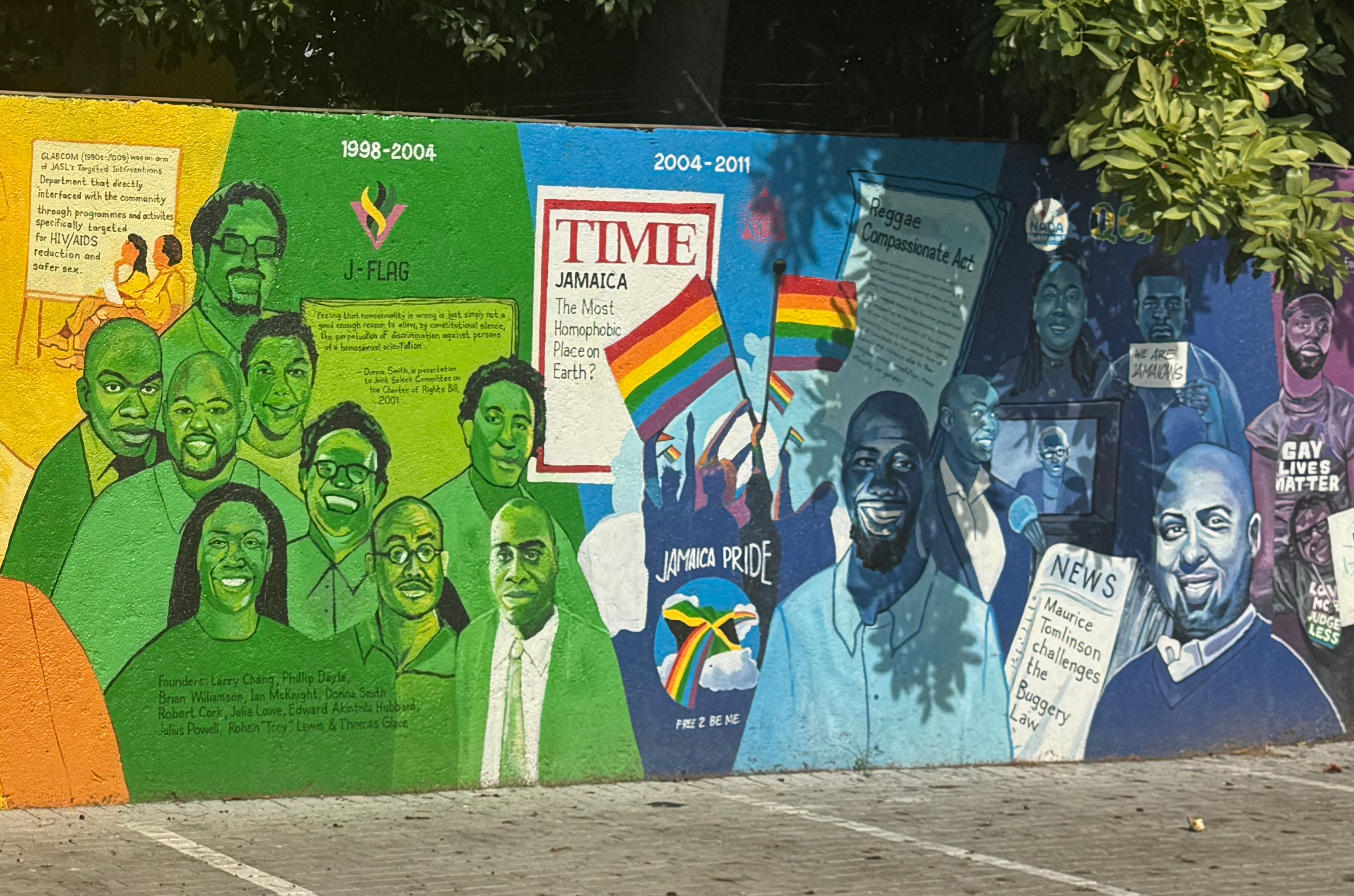
I can fly to Barbados, my passport stamped, and I will be welcomed without reservation. In a matter of hours, if I fly to Kingston, Jamaica—the country that raised me—I am acutely aware that by simply existing as an LGBTQ+ person, I am technically breaking the law. The contrast is jarring: two island nations in the Anglo-Caribbean, separated by water but united by colonial history, yet vastly different in their treatment of people like myself. It’s harrowing to experience how a person can shift from a free citizen to a transnational criminal simply by crossing a border within their own region.
Despite being raised in the Caribbean—growing up with the same neighbors, attending the same schools, sharing the same languages and histories with peers—my LGBTQ+ identity becomes the sole trait that renders me un-Caribbean or un-Christian, or for others, un-African, un-Asian, un-Muslim—an alien, or an illegal. This contradiction is not incidental. It is strategic.
The contrast of policies, norms, and attitudes in Barbados and Jamaica provides an example of the variability of laws in the Anglo-Caribbean. This led me to ask the question: What explains the variation in criminalizing and decriminalizing homosexuality across the region? I argue that while British colonialism introduced the laws criminalizing homosexuality across the Anglo-Caribbean in the 1850s, the process of decriminalization today is being delayed or advanced by transnational actors.

The Current Legal Landscape
At the start of 2025, sixty-three countries worldwide criminalized homosexuality, and that number has since risen to sixty-five. Thirty of these countries are members of the Commonwealth of Nations,1 made up of fifty-six countries united by shared values, many of which stem from their historical ties to the British Empire. (There are ten Commonwealth nations in the Caribbean.) All countries participate equally in Commonwealth decision making, including the biennial Commonwealth Heads of Government Meeting (CHOGM), where leaders set policies and priorities.
During the British colonial era, antihomosexuality laws were known as “buggery laws.” Today those same laws are often codified under Sexual Offences Acts—non-procreative intimacy that carries sentences ranging from ten years to life imprisonment. The persistence of these laws in most Commonwealth states—specifically the Caribbean—isn’t merely cultural or political but deeply structural, rooted in legal architectures that colonial powers left behind. There is a stark variation in LGBTQ+ rights across the Anglo-Caribbean, and my research shows that transnational anti-LGBTQ+ networks from the Global North strategically exploit colonial legal structures to undermine decriminalization efforts and local activism.
Table 1: Commonwealth of Nations States that Criminalize Homosexuality
| REGION | NATIONS | COUNT |
|---|---|---|
Asia | Bangladesh, Brunei, Malaysia, Pakistan, Sri Lanka | 5 |
Africa | Cameroon, Eswatini, Ghana, Kenya, Malawi, Mali, Nigeria, Sierra Leone, Tanzania, The Gambia, Uganda, Zambia, Zimbabwe | 13 |
Caribbean | Grenada, Guyana, Jamaica, Saint Lucia, Saint Vincent and the Grenadines, Trinidad and Tobago | 6 |
Oceania | Kiribati, Papua New Guinea, Samoa, Solomon Islands, Tonga, Tuvalu | 6 |
TOTAL | 30 |
Understanding Transnational Influence
Transnational actors are organizations, institutions, and individuals operating across borders that support or influence local movements, either by providing legal aid, funding, advocacy strategies, or political pressure. Well-known pro-LGBTQ+ transnational actors include the Human Rights Campaign, Human Dignity Trust, and the Kaleidoscope Trust, which support grassroots LGBTQ+ movements. Yet, their efforts are increasingly met with resistance from well-coordinated anti-LGBTQ+ transnational networks that work to delay, disrupt, or delegitimize this progress.
How Anti-LGBTQ+ Networks Operate in the Global South
Taking a look at the Global South broadly, the majority of transnational anti-LGBTQ+ organizations that operate there are based in the United States. Some of the largest funders of anti-LGBTQ+ campaigns include Alliance Defending Freedom, American Center for Law and Justice, Catholic Family & Human Rights Institute, International Organization of Families, United Families International, Family Research Council, and World Congress of Families (WCF).
In the Global South, anti-LGBTQ+ networks first target developing countries that have existing or deeply entrenched anti-LGBTQ+ sentiments. A tactic some activists describe as “forum shopping” refers to anti-LGBTQ+ networks seeking out the “weakest link” on the global playing field to promote their agenda. These groups target local anti-LGBTQ+ movements as testing grounds for advancing a global reaction against the liberal norms of LGBTQ+ rights. By leveraging local contexts where anti-LGBTQ+ sentiments are entrenched, they aim to create a ripple effect, legitimizing their broader global agenda against inclusivity. They strategically focus on societies that have yet to decriminalize same-sex relations, many of which are former British colonies within the Commonwealth. Understanding that colonial institutions shaped the foundations of Anglo-Caribbean states, they position LGBTQ+ rights as inherently incompatible with these nations’ democratic and developmental identities.
LGBTQ+ people—who represent a small percentage of the Global South—are frequently cast by these movements as the villains in manufactured moral panics, portrayed as threats to children, faith, family, and national sovereignty. A key tactic is translating global rights language to resonate with local fears and cultural anxieties. These networks skillfully mimic the strategies of pro-LGBTQ+ movements, recoding queer existence as an existential threat to cultural, religious, and national values. In the Global South, how LGBTQ+ people are framed often determines whether rights are expanded or denied:
- Religious frame: Queerness signals moral decay, defying Biblical or Quranic teachings and unleashing a slippery slope to social collapse.
- Family values frame: LGBTQ+ rights are framed as attacks on children and traditional reproduction.
- Economic frame: LGBTQ+ people are labeled economically unproductive, threatening population growth, yet paradoxically commodified through pink tourism.
- Anti-imperial frame: Queerness is painted as a Western export, weaponized as evidence of cultural imperialism.
Redefining What is “Natural”
During my research throughout the Caribbean, LGBTQ+ activists noted that many Commonwealth citizens widely perceive homosexuality as a Western imposition—a so-called “white man’s disease”—justified by religious morality and enforced through criminalization. When Europeans arrived in the Caribbean, they did not introduce homosexuality—they imposed the laws that criminalized it. This distinction is critical. Across many precolonial societies, diverse sexualities and gender expressions were not only acknowledged but often celebrated and woven into the cultural fabric. What colonial powers exported was a rigid legal and moral framework that redefined these identities as deviant, criminal, and punishable by law.
Table 2: Precolonial Terminologies to Describe Same-Sex Intimacies in an African Context
| PRECOLONIAL TERMINOLOGY OF HOMOEROTICISM | DESCRIPTION | CULTURAL/GEOGRAPHICAL CONTEXT |
|---|---|---|
Ritualized Homosexuality | Refers to same-sex sexual practices as part of cultural rituals, not tied to modern notions of homosexuality. | New Guinea (Melanesia) |
Male Daughters | Women in a patrilineal society who take on roles typically reserved for men, often associated with inheritance and land ownership. | Nnobi (Western Nigeria) |
Female Husbands | Women who take other women as wives to gain social status and economic power, with the same rights as male husbands. | Nnobi (Western Nigeria) |
Woman-to-Woman Marriage | Marriage between women, often as an alternative to male-female marriage, not necessarily involving sexual relations but having emotional and social significance. | West Africa, Southern Africa, East Africa, Sudan |
Uksoma | Nonpenetrative thigh sex, a form of sexual activity that allows young people to engage in sex before marriage without the risk of pregnancy. | KwaZulu-Natal (South Africa) |
Isoka | Term for a man who has multiple sexual partners, often related to masculine identity and social status. | Zulu (South Africa) |
Mudoko Dako | Effeminate males treated as women and allowed to marry men. | Langi (Northern Uganda) |
Kabaka Mwanga | The king of Buganda, whose homosexuality was an open secret. | Buganda Kingdom (present-day Uganda) |
Inkotshane, Motsoalle, Goor-Jiggen | Terms in traditional African languages describing same-sex erotics. Examples: inkotshane (Shangaan), motsoalle (Basotho women), goor-jiggen (Wolof). | Shangaan (Southern Africa), Basotho (Lesotho), Wolof (Senegal) |
Anti-LGBTQ+ networks strategically align themselves with multilateral institutions like the United Nations, invoking articles related to family to undermine LGBTQ+ rights. By co-opting language from doctrines like the Universal Declaration of Human Rights (UDHR) and the Convention on the Rights of the Child (CRC)—particularly Article 16 of the UDHR, which frames the family as “the natural and fundamental group unit of society”—they weaponize “pro-family” rhetoric to legitimize homophobia. This tactic enables political leaders to cloak discriminatory agendas in the language of international legitimacy and exploit anti-LGBTQ+ sentiment for political gain.
Researchers like Phillip Ayoub, Kristopher Velasco, Kapya Kaoma, Meredith L. Weiss, and Michael J. Bosia have documented how anti-LGBTQ+ networks in the Global North are exporting sophisticated counterstrategies to the Global South—repackaging Global North culture war tactics into local resistance movements. These include narrative tools, funding pipelines, and legal blueprints for opposing decriminalization, education reform, and civil protections. For comparison, in the history of decriminalization, the French (1791), Spanish (1822), and Ottoman Empires (1858) repealed laws criminalizing homosexuality significantly earlier than the British Empire, which retained and exported antisodomy statutes well into the twentieth century. Once the metropoles decriminalized, many of their former colonies eventually followed suit. Whereas former British colonies—especially those within the Commonwealth—are disproportionately represented among the countries that continue to criminalize same-sex relations and show slower rates of decriminalization.
The Structural Vulnerability of the Caribbean
What makes Caribbean networks particularly susceptible to influence by anti-LGBTQ+ groups? One of the most significant obstacles to repealing these discriminatory laws lies in the constrained judicial sovereignty throughout the Anglo-Caribbean. When these nations achieved independence, many inherited a problematic legal provision known as the Savings Law Clause—a constitutional mechanism that effectively “grandfathers” colonial-era laws, rendering them immune to constitutional challenges even when they directly contradict newly adopted rights frameworks. Compounding this issue, several Caribbean countries continue to recognize the Judicial Committee of the Privy Council in England as their final appellate court, creating the paradoxical situation where ostensibly sovereign nations must appeal to their former colonial power for ultimate judicial validation.
The World Congress of Families in the Anglo-Caribbean—A Transnational Illiberal Network in Action
The World Congress of Families (WCF) is the largest anti-LGBTQ+ organization globally, operating as a sophisticated transnational illiberal network that seeks to undermine LGBTQ+ rights. The WCF functions through a global network spanning over eighty countries, made up of “pro-life and pro-family organizations, scholars, leaders, and people of faith and goodwill” that advocate for what they term the “natural family” as the “only fundamental and sustainable unit of ordered liberty and civil society.”

The WCF operates as a program of the International Organization for the Family (IOF), and it spreads its agenda by organizing international conferences or "Congresses." The conferences function as sites of right-wing strategy development aimed to attract political elites, religious organizations, and anti-LGBTQ+ followers within given regions. The WCF’s presence across multiple Anglo-Caribbean nations exemplifies strategic geographic targeting. Rather than focusing on a single country, the WCF has systematically developed a regional network through five key conferences.
For example, the fourth WCF Caribbean conference was held in Antigua in 2017 and addressed topics like population control and critiques of gender theory, featuring notable religious right leaders. The event focused on anti-abortion and anti-LGBTQ themes, reinforcing traditional family views and criticizing comprehensive sex education. The presence of local political figures, such as the foreign minister of St. Lucia, reveals the potential normalization of these harmful ideologies within regional governance.
Such gatherings are not isolated; they are part of a broader strategy to infiltrate social and political discourse. This multisite approach enables the diffusion of ideological frameworks throughout an entire region, creating momentum that transcends national boundaries. Similar patterns can be observed in their operations across countries like Nigeria, Ghana, Poland, Hungary, and Russia—where the WCF holds twice the number of conferences.
Toward True Decolonization and LGBTQ+ Rights
What explains why Barbados decriminalized and Jamaica has not? The answer lies in a combination of legal reform and strategy. First, Barbados’s 2021 transition to a republic helped remove judicial barriers like the Savings Law Clause and reliance on the Privy Council, allowing greater judicial autonomy through the Caribbean Court of Justice. In contrast, Jamaica’s 2011 Charter of Fundamental Rights and Freedoms reentrenched the Savings Law Clause, effectively reinforcing protections for laws criminalizing same-sex activity. This was widely seen as a preemptive maneuver by anti-LGBTQ+ actors, timed to coincide with early organizing efforts by LGBTQ+ activists. Transnational evangelical organizations were simultaneously expanding their influence in Jamaica, allying with political elites and providing resources to anti-LGBTQ+ causes.
In Barbados, activists used timing and limited media coverage to get a strategic advantage. During the COVID-19 pandemic, media coverage of the court filing (for reforms) was limited, allowing LGBTQ+ actors to advance their case with minimal public backlash. Anti-LGBTQ+ groups missed the opportunity to petition the court as interested parties because of this “quiet strategy” shielding the case from being politicized or derailed before it was heard. Barbadian pro-LGBTQ+ activists also coordinated closely with regional actors across the Eastern Caribbean such as the Eastern Caribbean Alliance for Diversity and Equality (ECADE), following a regional strategy aimed at incremental legal victories.
The comparison between Jamaica and Barbados illustrates that decriminalization outcomes in the Caribbean are not solely determined by judicial bodies or legal doctrine. Instead, they reflect a confluence of factors: constitutional structure, timing, and strategic litigation.

Conclusion
Jamaica and Barbados demonstrate how a once-colonial issue has evolved through the strategies of transnational actors. Given the entrenched colonial legal mechanisms, a pressing question emerges: Can the Caribbean be considered truly independent if its legal systems remain constitutionally tethered to its former metropole—where colonial laws and institutions still shape the boundaries of personal freedom today?
The challenges facing LGBTQ+ communities in the Anglo-Caribbean are not isolated phenomena, but part of a coordinated global retrenchment cloaked in the rhetoric of “pro-family values” and opposition to “gender ideology.” These transnational movements have gained traction globally, providing new language and transnational support networks for anti-LGBTQ+ sentiment that was previously justified through colonial-era morality codes. The Anglo-Caribbean case study reveals the need for equally sophisticated strategies to counter such networks and protect human rights across borders.
Reference
- I use the term Commonwealth to refer to modern states that are both members of the Commonwealth of Nations and former colonies of the British government.
Contributor Bio
2024–2025 Undergraduate Associate Jama Willis graduated Harvard College in 2025, with a degree from the Departments of Government and of African and African American Studies. He is currently a government relations and advocacy intern at Amnesty International.