

Americans in the Crosshairs of Chinese Transnational Repression
When agents of the Chinese government harass dissidents on US soil, it's a threat to US sovereignty. And sometimes the agents are Americans themselves.
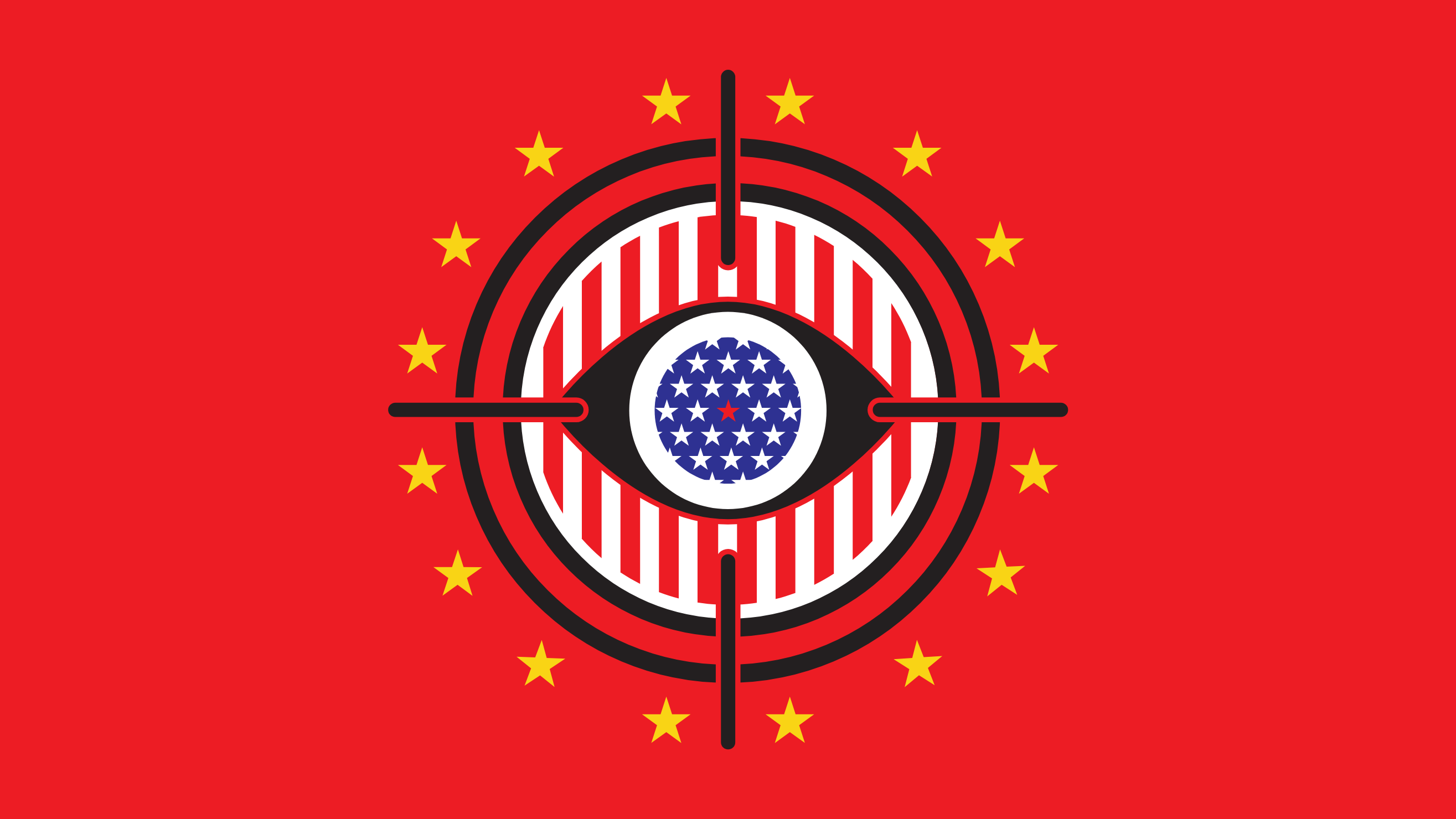
On a warm, rainy fall morning in the height of the COVID-19 pandemic, I parked my sedan on an unremarkable American suburban cul-de-sac. I had to double-check the address of my stop as each house in the circle was a slightly modified version of the next. My destination house had thoroughly embraced the season: scarecrows, mums, and bales of hay adorned its tidy entryway. Noting the American flag flanking the front door, I thought the occupant of this house could be a good neighbor, a good citizen, a good American. But this was no neighborly visit: I was there in a professional capacity—as an FBI agent conducting an interview following the arrest of a former New York City police officer accused of working for the People’s Republic of China (PRC) government.
The officer, Michael McMahon, was charged with acting as an illegal agent of the PRC in connection with its Operation Fox Hunt. Specifically, he was accused of stalking, harassing, and intimidating two Chinese nationals, both green card holders, on behalf of the Chinese government. McMahon was one of eight people indicted in this investigation, and the prosecution that followed was the first of its kind in the United States related to the PRC government's overt campaign to target political dissidents abroad.
While the case was an attempt by US law enforcement to stop the PRC’s transnational overreach, it also highlighted the challenges that many democratic states, including the US, have in identifying and combating cases of foreign interference. The contrast of a decorated retired Irish-American police officer now working as an undercover PRC spy raises questions about gaps in awareness, the law, and perhaps even in morality, in cases of transnational repression.

Defining Transnational Repression
According to the FBI, acts of transnational repression occur when “foreign governments reach beyond their borders to intimidate, silence, coerce, harass, or harm members of their diaspora and exile communities in the United States.” Freedom House, a nonprofit that tracks global acts of transnational repression, defines the term in much the same way, adding techniques that include “assassinations, illegal deportations, abductions, digital threats, Interpol abuse, and family intimidation.”
Transnational repression is certainly not limited to US-China relations. A frequently used tool of authoritarian regimes, it is an international threat to state sovereignty. That is, the United States, like many democratic nations, possesses absolute authority within its own borders. When the PRC conducts criminal acts on US soil, it overrides and ignores US sovereignty, a ripple effect that not only threatens the rights of China’s victims but also creates a host of national security challenges for the US. However, few countries have the term “transnational repression” defined and codified into their laws. In the US, for example, there is no legal definition or specific law pertaining to this transgression.
Again, while transnational repression is neither new nor specific to one country, Freedom House names China as the world’s biggest perpetrator. In fact, between 2014 and 2023, Freedom House identified 214 separate attacks initiated by China. Normally, the targets of PRC transnational repression are those people, usually ethnic Chinese living abroad, who speak in defense of what the PRC regime sometimes labels as the “five poisons:” Tibetan independence, Xinjiang independence, Taiwan independence, the democracy movement, and the Falun Gong.
Operation Fox Hunt: Overt Transnational Repression
In 2014, Chinese President Xi Jinping announced the start of Operation Fox Hunt (and its companion, Operation Sky Net) as an international dragnet to track down and repatriate corrupt Chinese officials and fugitives who have fled with stolen assets. While this campaign is officially part of China's anticorruption efforts, it has drawn significant international scrutiny and criticism from US law enforcement and human rights organizations due to its tactics, targets, and true intentions.
According to the FBI, Operation Fox Hunt provides permissive cover to target political dissidents and employ coercive tactics that threaten US sovereignty. By legitimizing it as an official “most wanted” campaign, the PRC is able to file Interpol Red Notices, calling for the repatriation of individuals named on their list.
In the Michael McMahon case, the targets—or victims—were two New Jersey residents named to Fox Hunt’s “top 100” list. While some media outlets have reported their true names, for ongoing personal protection they are referred to by the US Department of Justice as John Doe and his wife, Jane Doe.
In September 2016, Hu Ji, a PRC police officer from Wuhan, arrived in the US to begin surveilling and harassing the Does. Hu hired a team of co-optees living in the US to assist him, including McMahon who, at the time, was working as a private investigator. Over the next few years, the team of operatives worked to identify the couple’s residence, as well as other information that could help them forcibly repatriate John and Jane back to the PRC.
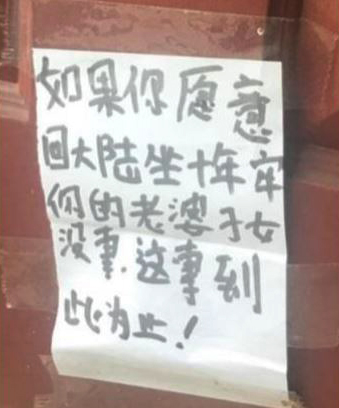
The operation was intended not only to locate John Doe, but to coerce him into returning to the PRC by exerting pressure on his family members. In April 2017, PRC officials threatened to jail John Doe’s sister, who lived in China, unless she persuaded their infirm, elderly father to travel to the US to lure John Doe back to China. John Doe’s ailing father did travel to the US and, per the instructions of PRC officers, begged John to obey the PRC government or else his family would suffer. After John refused, in September 2018, PRC operatives Zheng Congying and Johnny Zhu drove to the New Jersey residence of John and Jane Doe—at the address that McMahon had provided through his investigative work—and attempted to enter the house. They left a note on the front door that read: "If you are willing to go back to the mainland and spend 10 years in prison, your wife and children will be all right. That's the end of this matter!"
McMahon’s defense at trial was that of ignorance: ignorance in understanding transnational repression and of the law. Simply put, McMahon claimed he didn't know he was working directly for the PRC government—he thought he was hired by a translation company to recover assets for a PRC-based company. The prosecution, however, proved beyond a reasonable doubt that McMahon was fully aware of the connection back to the PRC government.
Evidence gathered by the FBI showed McMahon knew the targets of his investigation were wanted by the PRC government. For example, McMahon texted this fact with another subcontracted investigator. After providing the victims’ address, McMahon told his surveillance partner that he was “waiting for a call” to find out what to do next. McMahon’s partner responded, “Yeah. From NJ State Police about an abduction,” to which McMahon responded, “Lol.” The subtext in this exchange suggests both investigators recognize there is more to this assignment than a simple locate and watch, yet state police responding to such an abduction would be oblivious to the greater context.
Americans Promoting Transnational Repression: Lack of Laws, Awareness, or Morality?
McMahon’s arrest was not an isolated incident of a former US official or law enforcement officer aiding and abetting in a PRC campaign of transnational repression. In June 2022, Derrick Taylor, a former agent with the Department of Homeland Security (DHS), and Craig Miller, an immigration officer, provided immigration information to the PRC government regarding a Chinese dissident. According to court documents, they accessed and distributed sensitive information from a restricted database that included the dissident’s passport information, residences, flight records, and photographs.
Three other operatives—Matthew Ziburis, Frank Liu, and Jason Sun—were also indicted in the same case, accused of stalking and spying on US-based dissidents on behalf of the PRC government. Ziburis, a former Florida Department of Corrections officer, was hired to stalk a Chinese dissident artist living in San Francisco. Ziburis visited the artist—who made an unflattering sculpture of Xi Jinping—under a pretense, secretly planting a tracking device and taking audio and video of the artist.
Even earlier in 2022, another individual, Qiming Lin, was charged with acting as an agent of the PRC government for trying to stop a US Congressional candidate from running for office. Lin designed a plot to cause physical harm to the candidate, a Chinese-American critical of China, so he could not run for office. Lin attempted to hire a former law enforcement officer turned private investigator and told the investigator to "beat him... beat him until he cannot run for election. Heh, that’s the—the last resort. You think about it. Car accident, [he] will be completely wrecked... right?"
In all of these cases, Americans not necessarily predisposed ideologically or otherwise to support an authoritarian regime were co-opted by the PRC government. While corruptibility and lack of morality certainly played a factor in all of these instances, the larger issue is the ease in which all these Americans ended up contributing to China’s aggressive acts of repression on US soil. One plausible explanation is simply the lack of awareness and laws around the prolific nature of the PRC’s transnational repression campaigns. Over the past few years, indictments filed against private detectives in the US not only suggest the aggressive and creative nature of the PRC’s efforts to harass and punish individuals, but could also indicate significant gaps in understanding transnational repression at the local levels.

In the US, transnational repression does not stand alone as a criminal act. Because it is not codified into a legal definition, US law enforcement needs to rely on other laws to prevent and charge acts of transnational repression. In the US, the biggest, and in most cases only, law that addresses transnational repression is the Foreign Agents Registration Act, or “FARA,” which is found in the US code, Title 18, Section 951. Commonly referred to as a “951,” it makes it a crime to act as an agent of a foreign government without first filing such notification with the US government. Because transnational repression falls under this federal statute, many state
and local officials are either blind to the depth and breadth of transnational repression or don't understand how to prosecute it.
There are reasons for the blind spots in law enforcement, as overt acts are not always obvious. A complex transnational repression campaign can look like a simple trespass, burglary or other petty crime to a local police officer. Without international context, local communities, including law enforcement officers within those communities, may not fully appreciate how a minor infraction is tied to a more complex issue of human rights and US sovereignty. Similarly, private investigators in the US are used to conducting—and are legally allowed to—simple tasks such as surveillance and record checks. Without conducting due diligence into the end client of such taskings, private investigators could inadvertently be acting as an agent of a foreign government and breaking federal law.
And it's not just law enforcement officers that lack this awareness. Freedom House and other organizations maintain that acts of transnational repression are simply not reported—or at best, underreported—to US law enforcement. Indeed, for years the PRC government operated an overseas police station above a noodle shop in New York City’s Chinatown. While the intention was to operate in secret, many members of the diaspora community understood it to exist in plain sight—a constant reminder of the PRC’s authoritarian overreach even within the refuge of a democratic country.
Moving Forward: Reforming Transnational Repression Guardrails in the US
Many legislators and human rights advocates have recommended legislation specifically addressing transnational repression. Rather than rely on the interpretation of “951” to cover a sophisticated campaign, clear laws are needed that address all aspects of transnational repression, including digital stalking and harassment.
Additionally, awareness and laws at the state and local level are needed to educate all strata of law enforcement. So far, only one state in the US, Texas, has introduced legislation addressing transnational repression. In Texas, the Transnational Repression Act requires the Department of Public Safety of the State of Texas (DPS) to develop a training program for police officers regarding transnational repression, to include information about foreign governments and foreign terrorist organizations that are frequently involved in these cases/acts and the methods those governments and organizations use. While education will not stop all bad actors from assisting authoritarian regimes in transnational repression, it would establish a baseline of understanding currently lacking at the local levels of government.

In March 2025, federal legislation focused on strengthening the US response to transnational repression was reintroduced. Congressman Gabe Evans (R-CO) reintroduced the Law Enforcement Support and Counter Transnational Repression Act, which would help educate communities about transnational repression, increase visibility, and better connect victims with federal support through a hotline for this specific threat. Under this legislation, members of diaspora communities would have an anonymous and safe way to report cases of harassment. Congressman Seth Magaziner (D-RI) also reintroduced the Strengthening State and Local Efforts to Counter Transnational Repression Act, which would require the US Department of Homeland Security to prioritize strengthening state and local law enforcement capabilities to counter transnational repression.
As for McMahon, on April 16, 2025, although eligible for a sentence of up to twenty years, he was sentenced to eighteen months in prison and ordered to pay an $11,000 fine for acting as an illegal agent of the PRC government for his participation in Operation Fox Hunt. McMahon’s codefendants, Zhu Yong and Zheng Congying, were convicted by a federal jury and sentenced respectively to twenty-four months and sixteen months in prison. The remaining individuals are still at large—all are believed to have fled to China.
This case of PRC overreach on US soil is just one example. Moving forward, the increased scale of global migration, coupled with an increase of digital repression tactics, such as spyware or other online threats, suggests transnational repression will continue to be a moving target.
Although China is the biggest perpetrator of transnational repression, other regimes—Iran, Russia, Rwanda, to name a few—are also prolific and present their own set of specific challenges with respect to transnational repression countermeasures. Indeed, a year or so after conducting that interview in that quintessential American home, I was sweating outside an apartment building in the heat of a New York City summer, negotiating protection for Iranian journalist Masih Alinejad after armed Iranian agents visited her house in Brooklyn in a foiled assassination attempt.
Without greater awareness and more targeted laws, democracies like the US may continue to allow illegal actions of authoritarian countries inside their borders. And many offending states will continue to take full advantage of these gaps.
Contributor Bio
Dawn Norris Doak was a 2024–2025 Fellow in the Weatherhead Scholars Program. She is a supervisory special agent in the National Security Division of the Behavioral Analysis Program at the Federal Bureau of Investigation. Her research interests include transnational repression; malign foreign influence and disinformation; neocolonialism; and authoritarian vs. democracy studies.